
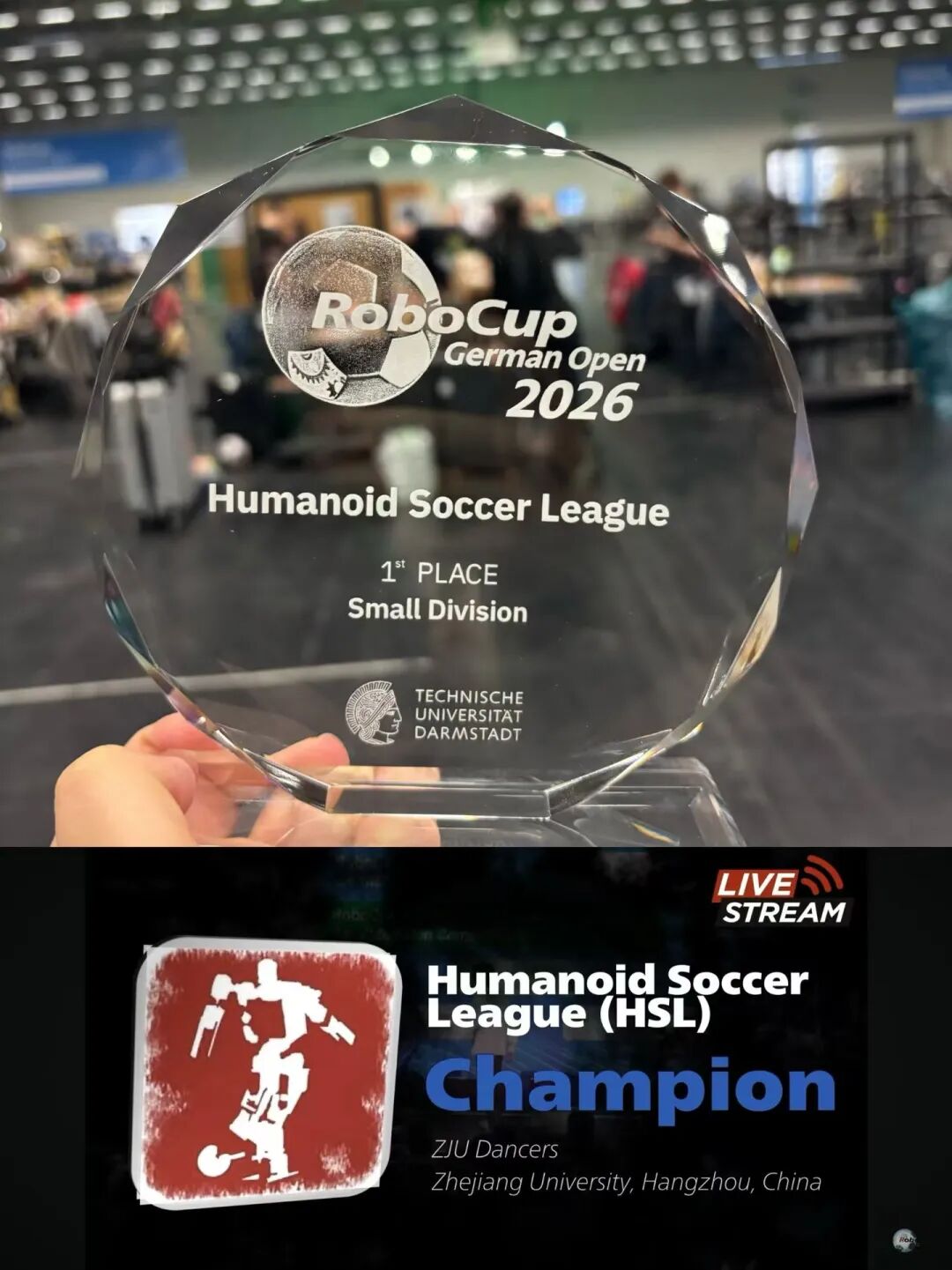
On March 14, 2026, at the RoboCup German Open humanoid robot soccer match in the Small Size category, Team ZJUDancer from Zhejiang University competed using the High Torque Robotics Mini Pi Plus humanoid robot platform.
The team advanced to the finals with a record of 5 wins and 1 draw, and ultimately defeated the defending champion, Team Hamburg Bit-Bots, 4–1 to claim the championship.
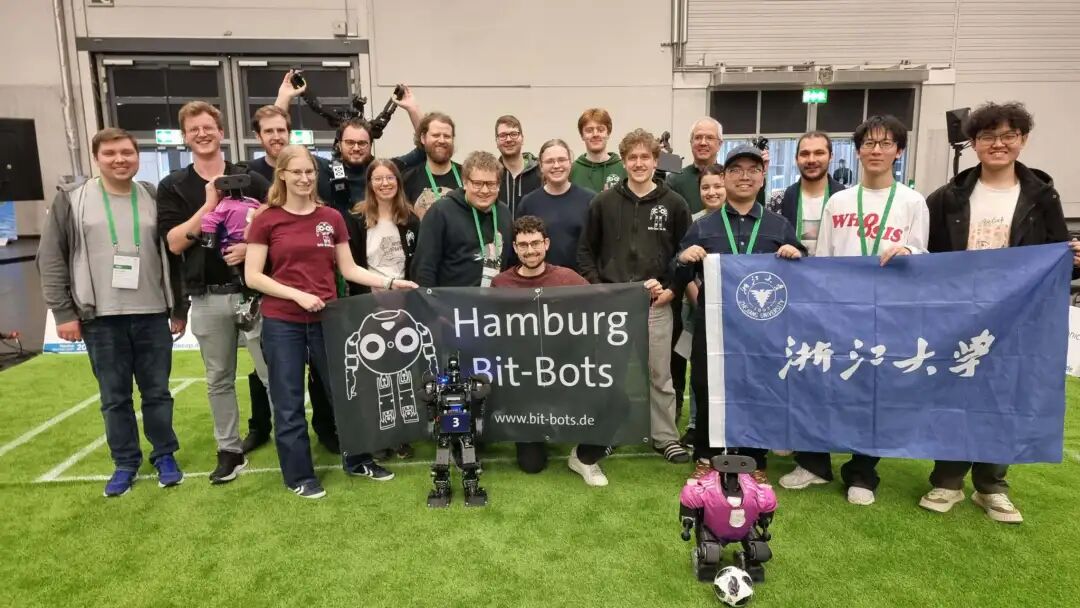
This marks the first time a Chinese team has won the championship in the Small Size division (under 15 kg) of the RoboCup Humanoid Robot Soccer international competition.
This division has long been dominated by traditional robotics powerhouses such as Germany, Japan and South Korea. The Chinese team's victory on European soil signifies a comprehensive breakthrough in China's humanoid robot technology.
RoboCup, known as the "World Cup of Robotics," was founded in 1997 and has since become one of the most influential technical competitions in the global robotics field, with the ultimate goal of developing robots capable of performing complex tasks fully autonomously.
RoboCup has long been regarded as the ultimate test for robotic technology. Soccer matches require robots to autonomously perform perception, decision-making and motion control, placing extremely high demands on system stability.
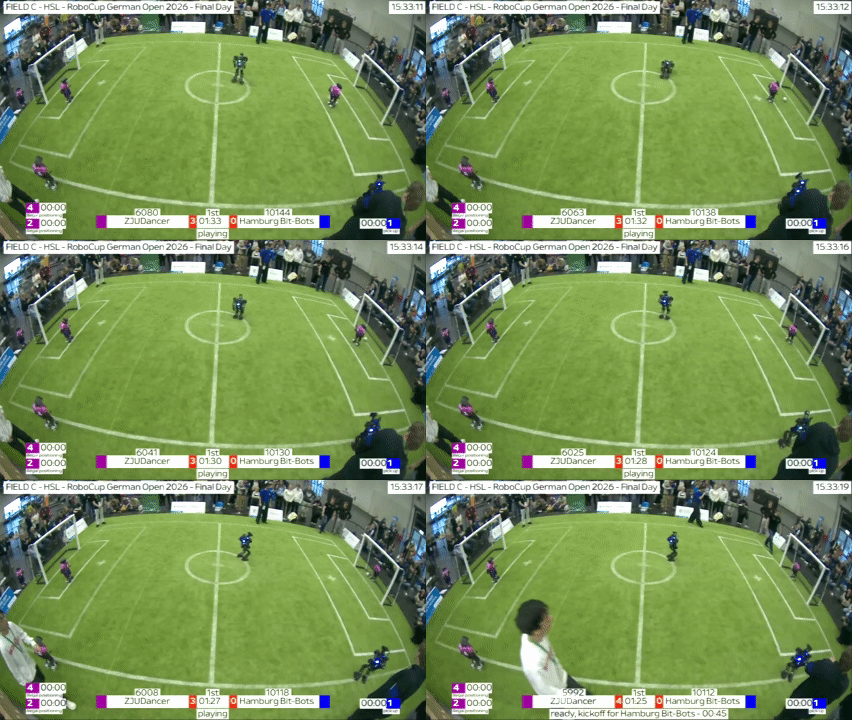
The stable operation of the Mini Pi Plus throughout high-intensity competition relies on the high-performance joint modules independently developed by High Torque Robotics.
Featuring high torque, high rigidity and stable force control, these modules enable the robot to maintain precise movement and stable posture even during high-speed play and frequent physical contact.

In addition, High Torque Robotics has developed a complete RoboCup-specific development framework tailored for the Mini Pi Plus.
It fully integrates core modules including motion planning, behavior tree decision-making, visual perception and communication coordination.
This framework not only meets the core requirement of fully autonomous operation in competition, but also flexibly adapts to customized tactical configurations, enabling streamlined debugging and deployment.
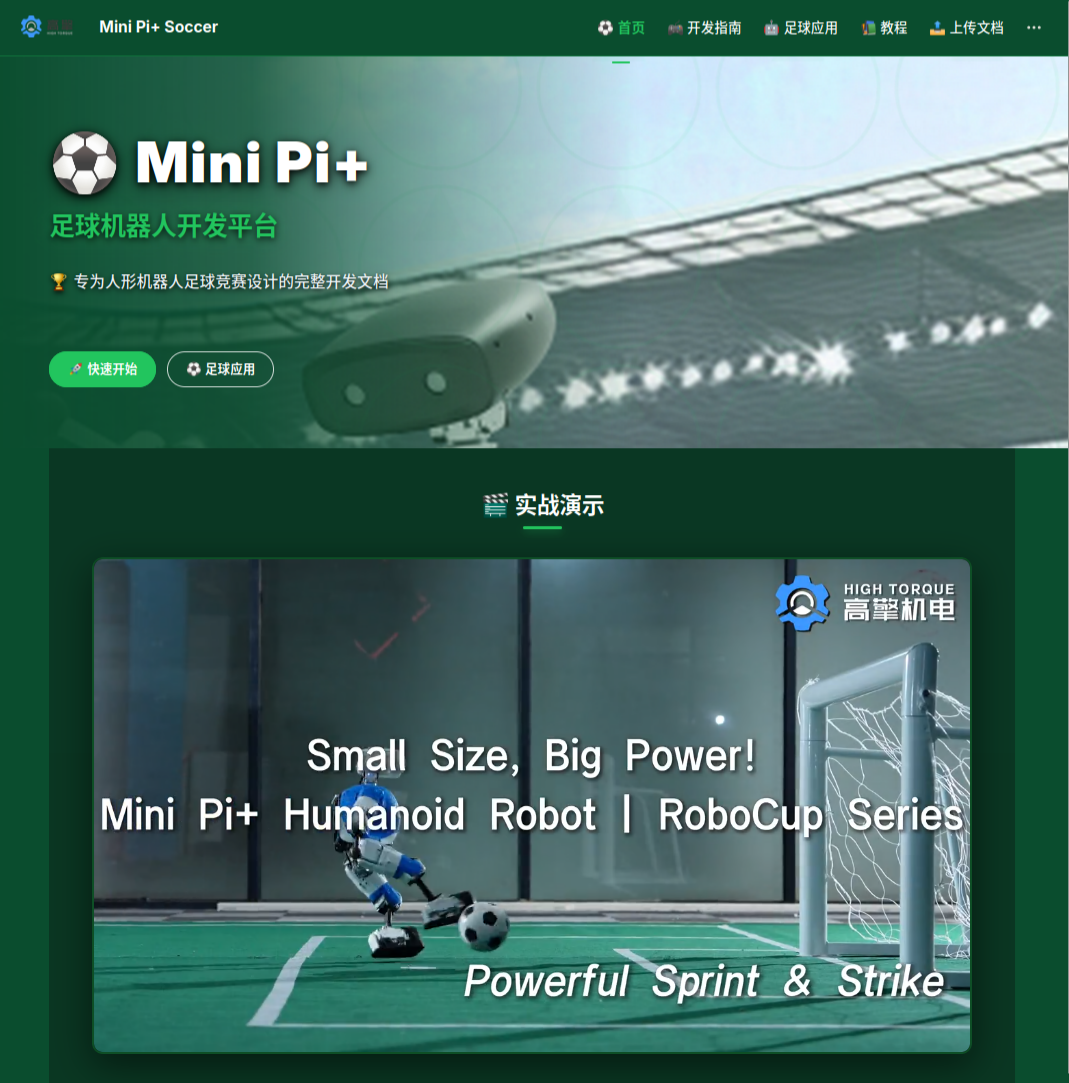
Mini Pi Plus Development Documentation: https://zixiangme.github.io/mini-pi-soccer-docs/
Going forward, High Torque Robotics will continue to advance the Mini Pi Plus platform across robotic soccer, scientific research, education and the developer ecosystem, and build an open R&D platform for humanoid robots.

By opening up its hardware design and software framework, High Torque Robotics aims to lower the barriers to humanoid robot development, enabling more universities and developers to participate in advancing robotics and propel humanoid technology into a wider range of applications.

To purchase, collaborate or learn more,
please scan the QR code above to fill out our inquiry form.
 Form submitted successfully!
 Form submission failed!
 Phone:400-6080-891
  Email:service@hightorque.cn
  Wechat:GQJD2022